- Accept card payments – lowest rates from 0.27%
- Keep your card processing fees to a minimum
- Direct access to the UK’s leading card processing banks
- We ensure your rates always remain competitive
No spam emails or calls
Choose from the payment methods then click Next
What's your turnover each month?
Enter the name of your company
Enter your company's postcode and contact number
Tell us what you need
Fill in our quick form and we’ll give you a call for a brief 5-minute chat to understand exactly what you're looking for.
Get tailored quotes
We’ll match you with up to three of the most competitive offers from our trusted providers that suit your business.
Pick with confidence
We’ll help you understand the options so you can choose the best fit — quickly, clearly, and without any pressure.




Payments Company: Complete Guide to Modern Payment Solutions for UK and EU Businesses
A payments company serves as the essential bridge connecting your business to the complex world of electronic transactions, managing everything from card processing to fraud prevention. In 2025, these specialist providers have become indispensable for UK and EU businesses seeking to streamline operations, reduce costs, and deliver superior customer experiences. Modern payments companies integrate card schemes like Visa and Mastercard, banks, digital wallets such as Apple Pay and Google Pay, and alternative payment methods into one unified service that simplifies how you manage payments across all channels.
Their payments solutions are highly versatile, catering to a wide range of industries including hospitality, retail, travel, and education.
What a payments company does today
This article focuses on practical business outcomes you can achieve: improved cash flow through faster settlements, higher conversion rates via optimized checkout experiences, reduced operational risk through professional compliance management, and streamlined administration by consolidating multiple payment functions under one provider. Payments companies also help optimize the entire line of business operations, from managing multiple locations and sales channels to employee management, enhancing efficiency and profitability.
Why difficult financial service providers slow you down
Traditional banks and “one size fits all” merchant account providers often create significant operational friction that directly impacts business performance. Many UK and EU businesses find themselves trapped in rigid systems designed for conventional retail models rather than today’s dynamic digital economy.
The most common pain points include:
- Lengthy onboarding processes taking 3-6 months, with extensive documentation requirements and multiple approval stages that delay product launches and market entry
- Inflexible pricing structures that don’t account for business model variations, seasonal fluctuations, or transaction mix differences across customer segments
- Slow dispute resolution where chargeback disputes can take weeks to resolve, tying up working capital and creating administrative burden
- Limited sector support particularly problematic for gig economy platforms, travel booking sites, subscription services, and marketplace businesses that don’t fit traditional merchant categories
A concrete example involves a UK marketplace that launched in 2023, specializing in connecting local service providers with customers. Despite solid business fundamentals and growing transaction volume, they struggled for months to secure a merchant account due to complex Know Your Customer (KYC) and Anti-Money Laundering (AML) requirements that traditional banks couldn’t adapt to their multi-party transaction model.
A specialist payments company can design bespoke solutions for such scenarios:
- Custom payment flows that accommodate marketplace commission splits and escrow-style settlement
- Tailored risk management rules that understand the business model rather than applying generic fraud detection
- Flexible settlement schedules that support both immediate payouts to service providers and delayed settlement for quality assurance periods
- Streamlined onboarding processes designed for platform businesses with multiple sub-merchants
The difference lies in understanding that modern business models require payment solutions designed for flexibility rather than standardization.
Banking and regulatory landscape
Banking regulations, PSD2/PSD3 directives, and UK Financial Conduct Authority (FCA) requirements significantly shape what payments companies can offer in 2025. The evolving compliance landscape creates both challenges and opportunities for businesses across different sectors.
Changing compliance requirements particularly impact specific business models:
- Strong Customer Authentication (SCA) deadlines and Regulatory Technical Standards (RTS) modifications affect how gig economy platforms and marketplaces handle recurring payments and stored credentials
- Enhanced Due Diligence (EDD) requirements under AML directives create additional onboarding complexity for high-risk sectors including travel, gaming, and cross-border e-commerce
- PSD3 open banking expansions introduce new opportunities for account-to-account payments but require updated technical infrastructure and risk management approaches
A sophisticated payments company typically maintains relationships with multiple sponsor banks across the European Economic Area and UK, providing merchants with choice, redundancy, and regulatory compliance across jurisdictions. This multi-bank approach offers several advantages:
- Regulatory arbitrage allowing businesses to operate under the most favorable regulatory framework for their specific sector
- Operational continuity ensuring payment acceptance continues even if one banking partner experiences issues or changes requirements
- Optimized routing directing transactions through the most cost-effective or highest-approval-rate banking relationships
Sectors particularly affected by regulatory changes include ride-hailing platforms needing to comply with marketplace regulations, food delivery apps managing driver payments under gig economy rules, cross-border e-commerce businesses navigating multiple VAT and consumer protection regimes, and subscription SaaS companies adapting to recurring payment authentication requirements.
The key insight is that regulatory compliance becomes a competitive advantage when managed professionally, rather than a burden that constrains business growth.
Outsourcing your payments operations
The concept of “payments as a managed service” gained significant momentum from 2018 onward as businesses recognized that payment operations require specialized expertise, significant ongoing investment, and constant adaptation to regulatory and technological changes.
A payments company acting as program manager takes responsibility for the entire payment ecosystem on your behalf. This includes sourcing and managing relationships with multiple acquirers, negotiating competitive processing rates based on combined volume across their client base, implementing and monitoring sophisticated fraud detection systems, and staying current with constantly evolving card scheme rules and requirements.
Consider a mid-sized hospitality chain operating 25 properties across the UK. Rather than maintaining internal expertise to manage PCI compliance audits, handle chargeback disputes, navigate scheme reporting requirements, and evaluate new payment technologies, they outsource these functions to a specialized payments partner.
The benefits become immediately apparent:
- Reduced internal hiring requirements eliminating the need for specialized payment operations staff, compliance officers, and technical integration resources
- Faster deployment of new capabilities including support for emerging payment methods like Apple Pay Later, Buy Now Pay Later options, and local alternative payment methods as they become available
- Lower operational risk exposure through professional management of fraud monitoring, compliance audits, and regulatory reporting obligations
- Access to institutional-grade negotiating power achieving better processing rates and terms through the payments company’s combined client volume
This managed service approach allows businesses to focus internal resources on core competencies while ensuring payment operations benefit from specialist expertise and economies of scale.
Consultancy services by sector
Many established payments companies now operate dedicated consultancy practices that help banks, airlines, hospitality groups, and retail chains redesign their payment strategies for improved performance and profitability. Rather than providing one-size-fits-all solutions, these practices deliver sector-specific expertise that addresses unique operational challenges and regulatory requirements.
The consultancy approach typically focuses on measurable outcomes:
- Increased authorization rates through optimized payment routing, improved customer authentication flows, and better issuer relationships
- Reduced chargeback ratios via enhanced fraud prevention, clearer merchant descriptors, and proactive dispute management
- Improved cash flow through optimized settlement terms, reduced rolling reserves, and more predictable funding schedules
- New revenue streams from value-added services including loyalty program integration, Buy Now Pay Later offerings, and embedded financial services
Standard consultancy services include comprehensive payment audits that identify optimization opportunities, Request for Proposal (RFP) support for businesses evaluating new payment providers, direct scheme negotiations to secure better interchange rates and terms, and ongoing optimization of existing payment flows based on transaction data analysis.
Banks
Payments companies provide strategic guidance to both issuing and acquiring banks seeking to improve risk models, optimize pricing structures, and accelerate product development timelines. This consultancy work focuses on transaction monitoring system enhancements, real-time fraud scoring implementation, and portfolio optimization using 2022-2025 transaction trend analysis.
A practical example involves a regional European bank that partnered with a payments consultancy to launch a Small and Medium Enterprise (SME) merchant acquiring product. The consultancy provided:
- Risk model development based on SME-specific transaction patterns and default probabilities
- Competitive pricing analysis and strategy recommendations for the local market
- Technology platform selection and integration support to minimize time-to-market
- Regulatory compliance guidance for merchant onboarding and ongoing monitoring requirements
The outcome delivered measurably better results for the bank: 40% increase in merchant acquisition volume, 25% reduction in fraud losses through improved risk scoring, and 8 months faster product launch compared to internal development estimates.
Airlines
Airlines face unique payment challenges including high average transaction values, extended chargeback liability windows up to 540 days, and complex multi-currency settlement requirements across global route networks. Payment consultancy for airlines focuses on cash flow optimization, risk management, and operational efficiency improvements.
Specific areas of focus include:
- Rolling reserve optimization adjusting hold percentages based on seasonal booking patterns, route risk profiles, and historical chargeback data
- Risk-based settlement strategies enabling faster access to funds for low-risk transactions while maintaining appropriate reserves for higher-risk bookings
- Secure card-on-file implementation supporting ancillary revenue opportunities including seat upgrades, meal purchases, and baggage fees without requiring customers to re-enter payment details
IATA regulatory compliance adds complexity, particularly around passenger rights and refund processing. Summer 2025 travel volume projections suggest significant seasonal spikes that require robust payment infrastructure and contingency planning for peak period processing.
Hospitality
Hotels, serviced apartments, and resort operators require sophisticated payment flows that support the entire guest journey from initial booking through post-stay charges. Modern hospitality payment strategies focus on reducing friction while maximizing revenue opportunities and operational efficiency. In addition, modern payment terminals in hospitality also support tips and gratuity management, improving customer service and staff compensation.
Key implementation areas include:
- Seamless card-on-file management enabling pre-authorizations for incidental charges, automatic settlement of room charges, and frictionless processing of additional services
- White-label payment integration within existing Property Management Systems (PMS) and booking engines to maintain brand consistency and reduce customer confusion
- Upsell optimization flows allowing guests to add services like breakfast packages, late checkout options, or spa treatments through stored payment credentials or digital wallet integration
The business impact includes significantly reduced front desk processing time, lower no-show rates through effective pre-authorization strategies, and simplified reconciliation across multiple properties within a hotel group or management company.
Retail
Retail payment consultancy focuses on ensuring business continuity through redundant payment infrastructure, optimizing omnichannel customer experiences, and maximizing authorization rates across different transaction types and customer segments.
Essential elements include:
- Multi-acquirer redundancy with automatic failover routing to prevent lost sales during payment processor outages or maintenance windows
- Omnichannel unification supporting complex customer journeys including click-and-collect services, online purchase with in-store returns, and loyalty program integration across all touchpoints
- Optimized payment routing directing transactions through the most cost-effective and reliable processing path based on card type, transaction value, and customer location
A fashion chain case study demonstrates the value: by implementing unified payment infrastructure across e-commerce, mobile app, and 150+ physical stores, they achieved 99.7% payment uptime, reduced transaction processing costs by 18%, and improved customer satisfaction scores through consistent payment experiences regardless of channel.
Card machines and point-of-sale solutions
Traditional countertop payment terminals have evolved significantly since 2020, with modern Android-based smart terminals offering enhanced functionality, better integration capabilities, and superior customer experiences. Today’s payments companies provide device portfolios tailored to specific business requirements and operational environments.
Device options typically include:
- Countertop terminals optimized for high-street retail environments with high transaction volumes, offering fast processing, receipt printing, and integration with Electronic Point of Sale (EPOS) systems
- Portable terminals designed for table service restaurants and hospitality venues, featuring long battery life, robust wireless connectivity, and intuitive interfaces for staff training
- Handheld mobile devices suited for events, delivery services, and pop-up retail operations, providing full payment acceptance capability in compact, battery-powered form factors
In addition to in-store solutions, modern payment solutions enable secure transactions not only in physical locations but also remotely, outside of traditional offices, through virtual terminals and mobile devices.
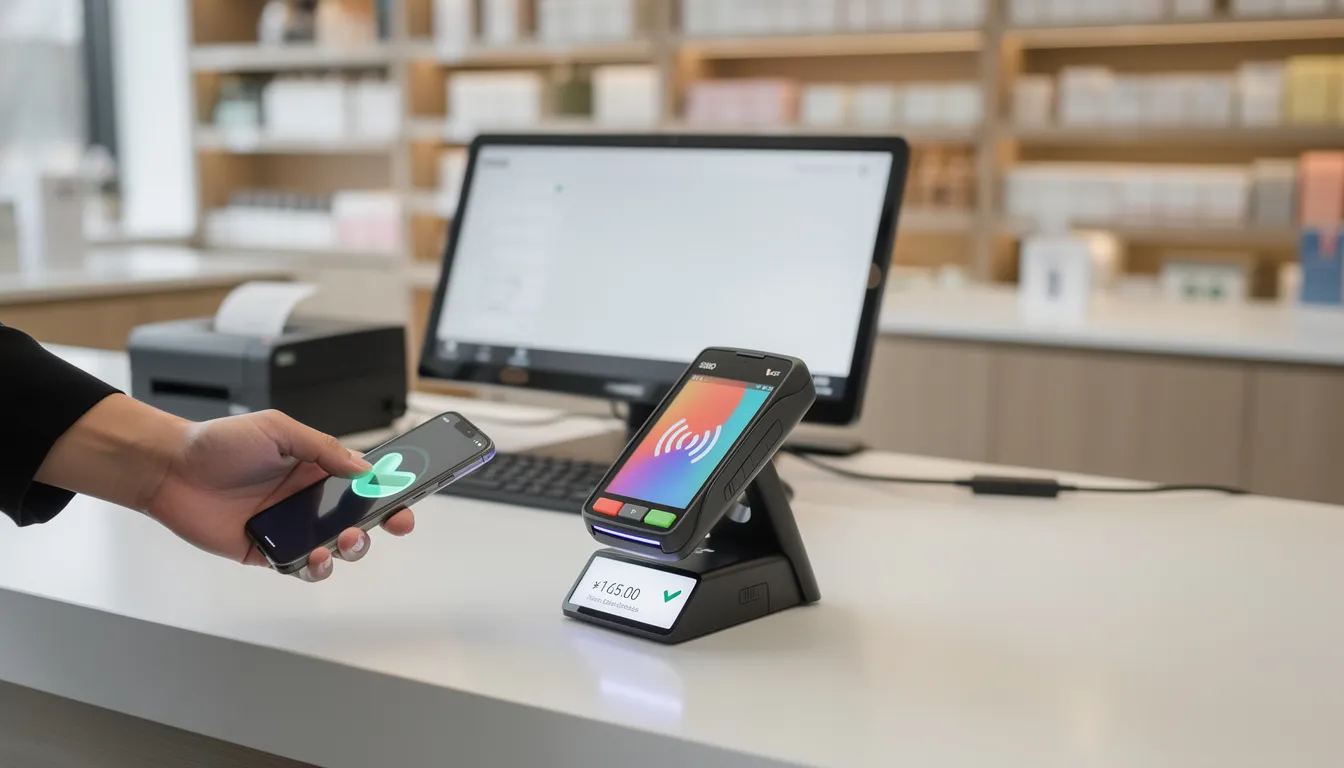
Modern terminals support comprehensive payment method acceptance including contactless cards, chip and PIN transactions, mobile wallet payments (Apple Pay, Google Pay, Samsung Pay), and QR code-based payment systems. The UK’s contactless payment limit increases implemented in 2021 and widespread adoption patterns observed through 2025 demonstrate growing consumer preference for frictionless payment experiences.
Business outcomes from upgraded terminal infrastructure include:
- Reduced queue times through faster transaction processing and multiple payment option support
- Lower cash handling costs as contactless adoption reduces cash transactions and associated security, counting, and banking expenses
- Enhanced hospitality experiences particularly valuable for restaurants implementing tableside payment, tip adjustment capabilities, and bill-splitting functionality for group dining
Online payments and payment gateway
Modern payments companies provide comprehensive online payment infrastructure including hosted checkout pages, API integration options, Software Development Kits (SDKs), and Pay by Link tools that enable merchants to accept payments across web, mobile, and social commerce channels. These solutions balance conversion optimization with security requirements and regulatory compliance.
Essential gateway features include:
- 3-D Secure 2.0 implementation providing Strong Customer Authentication (SCA) compliance while minimizing customer friction through risk-based authentication flows
- Advanced tokenization securing stored payment credentials for subscription billing, one-click repeat purchases, and account-on-file transactions
- Recurring billing management supporting subscription businesses with automated retry logic, dunning management, and flexible billing cycle options
- Unified checkout experiences enabling acceptance of major card schemes alongside digital wallets, Buy Now Pay Later options, and local alternative payment methods
Practical implementation examples demonstrate versatility: a subscription Software-as-a-Service (SaaS) platform billing customers monthly in both GBP and EUR benefits from automated currency conversion, intelligent retry logic for failed payments, and seamless plan upgrade processing. Meanwhile, a Direct-to-Consumer (D2C) fashion brand leverages Pay by Link functionality to convert social media engagement into sales, sending payment links through Instagram messages and WhatsApp conversations.
Compliance considerations include PCI DSS v4.0 requirements and GDPR data protection obligations. A specialist payments company reduces merchant compliance scope by hosting payment forms, managing cardholder data encryption, and maintaining certified processing environments. This approach significantly reduces both technical complexity and ongoing compliance costs for online merchants.
Team management and user permissions in payment solutions
Effective team management is at the heart of secure and efficient payment operations for businesses of all sizes. Modern payment solutions empower business owners to manage payments with confidence by offering robust user permission features that put you in control of who can access sensitive financial data and payment processing tools.
With advanced user roles and permissions, you can assign specific access levels to team members—ensuring that only authorized personnel can manage payments, view customer data, or process refunds. This granular control not only enhances security but also streamlines day-to-day operations, reducing the risk of errors and internal fraud. For example, a hospitality group in the United Kingdom can grant front desk staff access to process in-person payments, while restricting financial reporting and customer data to management, all from a centralized dashboard.
Payment services with prebuilt integrations and scalable client and server libraries make it easy to add or remove users as your business grows. Whether you’re onboarding new staff for a busy season or scaling operations to serve millions of customers, these flexible tools help you maintain efficiency and control. Owners and managers can track user activity, monitor sales, and access real-time insights to optimize team performance and cashflow management.
A broad range of payment options—including online payments, contactless payments, subscriptions, and phone payments—can be managed securely within one platform. This unified approach simplifies reconciliation, reduces administrative costs, and ensures that your team can deliver a seamless payment experience to customers across all channels.
Partnering with a registered payments company in the UK provides peace of mind, knowing your business is supported by secure, compliant, and cost-effective payment solutions. With a focus on security, these solutions protect your customers’ data, prevent fraud, and help you meet industry standards. Integration with your existing operations is straightforward, allowing you to simplify workflows, track sales, and access valuable business insights—all while maintaining full control over who can access and manage your payment services.
As your business evolves, whether in retail, hospitality, or online commerce, having a payment solution with flexible team management features ensures you can scale efficiently, deliver excellent customer service, and focus on growth. By leaving the complexity of payment processing and security to the experts, your team can concentrate on what matters most: serving your customers and driving revenue.
Insights, reporting and 24/7 support
Contemporary payment platforms provide sophisticated analytics dashboards accessible through web portals and mobile applications, delivering actionable insights that enable data-driven business optimization and operational decision-making.
Standard reporting metrics include:
- Authorization rate analysis identifying decline patterns by card type, issuer, transaction value, and customer geography to optimize payment routing and reduce false declines
- Chargeback monitoring with early warning systems, dispute trend analysis, and automated evidence compilation to minimize revenue loss and processing fees
- Payment method performance tracking conversion rates, average order values, and customer preferences across different payment options to optimize checkout configuration
- Settlement timeline tracking providing visibility into fund flows, reserve adjustments, and payout schedules to support cash flow forecasting and working capital management
Round-the-clock support infrastructure includes multiple contact channels (live chat, email, telephone) staffed by technical specialists who understand payment processing complexities and can resolve issues quickly. Dedicated account management provides proactive relationship oversight, regular optimization reviews, and strategic guidance on payment strategy evolution.
Real-world application: a retail chain uses weekend versus weekday payment data analysis to optimize staffing schedules, adjust promotional timing, and manage inventory allocation. When transaction patterns indicate increased weekend card-not-present fraud attempts, automated risk rules adjust authentication requirements while maintaining smooth experiences for legitimate customers.
The combination of detailed analytics and expert support enables businesses to continuously optimize payment performance while minimizing operational burden on internal teams.
Cash flow, funding and risk management
Modern payments companies directly influence business cash flow through flexible payout schedules, instant settlement options, and embedded financing solutions that leverage transaction history for credit decisions. These capabilities have become particularly valuable for businesses with seasonal fluctuations or growth capital requirements.
Settlement and funding options typically include:
- Standard settlement with next-business-day payouts providing predictable cash flow for most transaction types and risk profiles
- Instant settlement services enabling same-day or real-time fund access for premium fees, particularly valuable for businesses with immediate cash requirements or time-sensitive supplier payments
- Revenue-based financing offering working capital advances based on payment processing history, with automatic repayment through future transaction volume rather than fixed monthly payments

A practical scenario illustrates the value: a café owner in central London uses instant settlement functionality before bank holidays to ensure sufficient cash flow for employee payroll and fresh ingredient purchases when suppliers require immediate payment but customer transaction volume is typically lower.
Comprehensive risk management tools protect both merchant and payment provider interests:
- Velocity controls preventing unusual transaction spikes that might indicate account compromise or fraudulent activity
- Device fingerprinting identifying suspicious payment attempts based on browser characteristics, IP addresses, and behavioral patterns
- Chargeback alert systems providing early notification of dispute initiation with automatic evidence gathering and response coordination
- Sector-specific rules engines fine-tuned for different business models including travel booking patterns, digital goods delivery, and marketplace transaction flows
These tools work together to maintain optimal balance between fraud prevention and customer experience, avoiding false declines that damage conversion rates while effectively blocking genuine threats.
Why businesses choose a specialist payments company
The core advantages of partnering with a specialist payments company center on flexibility, sector expertise, speed to market, and unbiased product selection that independent providers can offer compared to single-bank or single-provider relationships.
Key differentiating advantages include:
- Multi-acquirer infrastructure providing redundancy, cost optimization, and performance improvements through intelligent transaction routing across multiple banking partners
- Enhanced negotiating power leveraging combined client volume to secure better interchange rates, reduced processing fees, and favorable contract terms that individual businesses couldn’t achieve independently
- Tailored routing strategies directing transactions through optimal processing paths based on card type, transaction value, customer location, and real-time approval rate data
Performance improvements typically deliver measurable results: conversion rate increases of 2-5% through reduced false declines, total cost of acceptance reductions of 15-25% through optimized routing and negotiated rates, and higher average order values when payment friction is minimized through streamlined checkout processes.
Service-level expectations include rapid issue resolution with most technical support tickets addressed within 2-4 business hours, proactive account optimization reviews conducted quarterly or semi-annually, and strategic guidance on payment method adoption as new options become available in target markets.
The specialist approach proves particularly valuable when businesses need to adapt quickly to market changes, regulatory updates, or growth opportunities without the constraints of legacy banking relationships or inflexible technology platforms.
About us as a payments company
Founded in 2017 and headquartered in London, our payments company serves UK and European Economic Area markets with a focus on delivering measurable business improvements through optimized payment strategies. Our founding team combines deep experience across traditional banking, major card schemes, and innovative fintech companies, with particular expertise in travel, telecommunications, hospitality, and retail sectors.
Our approach emphasizes customer-centric, product-agnostic solutions: we evaluate and recommend the best combination of acquirers, gateways, and risk management tools for each client’s specific requirements rather than promoting a single provider or technology platform. This independence allows us to continuously optimize client performance as market conditions, regulatory requirements, and business models evolve.
Key outcomes we’ve delivered to clients include:
- Simplified operational processes consolidating multiple payment relationships under unified management with single-point-of-contact support
- Increased revenue through improved authorization rates, reduced payment abandonment, and optimized transaction routing that minimizes processing costs
- Reduced risk exposure via professional fraud monitoring, compliance management, and proactive dispute resolution that protects both revenue and reputation
- Streamlined daily operations eliminating internal resource requirements for payment technology evaluation, vendor management, and regulatory compliance monitoring
Looking forward, our innovation roadmap focuses on supporting emerging Account-to-Account (A2A) payment methods, Open Banking integration opportunities, and real-time payment capabilities as they become available across UK and EU markets. We’re committed to ensuring our clients can adapt quickly to new payment technologies and customer preferences while maintaining operational stability and regulatory compliance.
Our mission remains focused on transforming payment operations from administrative burden into strategic business advantage, enabling our clients to focus on core business growth while we manage the complexities of modern payment infrastructure.