- Accept card payments – lowest rates from 0.27%
- Keep your card processing fees to a minimum
- Direct access to the UK’s leading card processing banks
- We ensure your rates always remain competitive
No spam emails or calls
Choose from the payment methods then click Next
What's your turnover each month?
Enter the name of your company
Enter your company's postcode and contact number
Tell us what you need
Fill in our quick form and we’ll give you a call for a brief 5-minute chat to understand exactly what you're looking for.
Get tailored quotes
We’ll match you with up to three of the most competitive offers from our trusted providers that suit your business.
Pick with confidence
We’ll help you understand the options so you can choose the best fit — quickly, clearly, and without any pressure.




Payment Gateways for Ecommerce: UK Business Owner’s Guide (And How We Cut Your Costs)
Fast answer: what is a payment gateway and why it matters to your UK business?
A payment gateway is the secure digital bridge between your ecommerce checkout and the banking system. When a customer enters their card details on your website, the payment gateway encrypts that sensitive information, routes it through the card networks (Visa, Mastercard, and others), and returns an approval or decline within seconds. Think of it as the invisible bouncer that checks credentials, protects payment data, and lets the right transactions through. Payment gateways are designed to safeguard customer data by adhering to PCI compliance and strict data security standards, ensuring sensitive information is protected during every transaction.
But here is what many UK business owners miss: the payment gateway is only one piece of the puzzle. You also need a merchant account (where funds settle before reaching your bank account) and often a payment processor to tie everything together. These components work in tandem, and optimising just one while ignoring the others leaves money on the table.
As a merchant services broker UK, we source both the payment gateway and the acquiring bank on your behalf. We do not simply point you to a single provider and wish you luck. We map your entire payment flow, compare card processing fees across multiple acquirers and gateways, and negotiate rates using the combined transaction volume of all our clients. The result? Our clients typically see savings of 15% to 25% on credit card processing compared with going direct to a bank or gateway provider.
Choosing the right payment gateway affects far more than just the ability to accept payments. It impacts approval rates, customer trust at checkout, and your overall cost structure. A poorly matched gateway can mean higher declines, frustrated customers, and fees that quietly erode your margins. It’s also crucial to offer payment methods that customers prefer, as catering to their payment preferences enhances satisfaction and reduces friction at checkout.
If you want to know exactly where you stand, we invite you to upload a recent merchant statement or payment gateway invoice. We will benchmark your current rates against the UK market, free of charge, and show you precisely where savings are possible.
How payment gateways work in ecommerce (and where we step in)
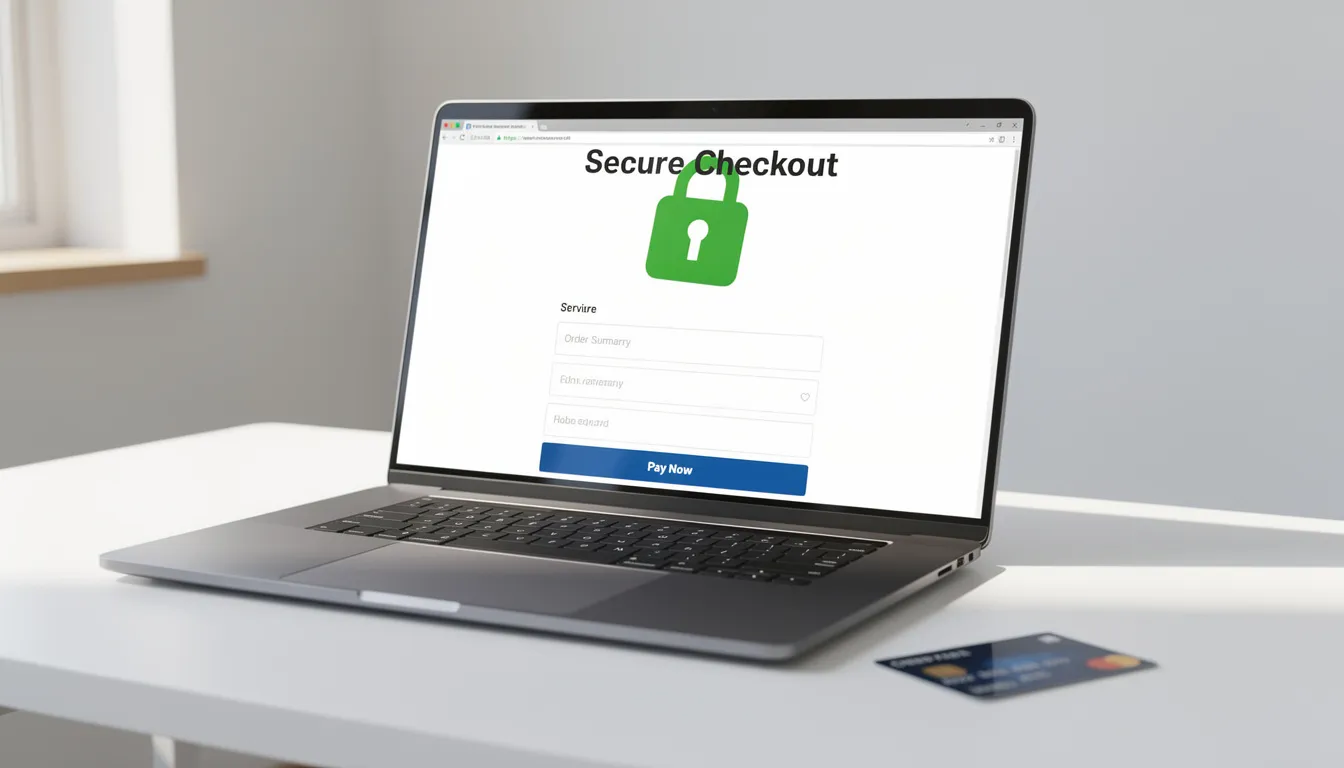
Understanding the mechanics of a card transaction helps you see why gateway and acquirer selection matters so much. Here is a simplified walkthrough of what happens when a customer pays on your online store in 2025:
- Customer initiates payment: The shopper enters their payment details, such as card information or digital wallet credentials (like Apple Pay or Google Pay), on your checkout page.
- Encryption and transmission: The payment gateway encrypts this payment information using protocols like TLS and tokenisation, then sends an authorisation request to your merchant acquirer.
- Card network routing: Your acquirer forwards the request through the relevant card scheme (Visa, Mastercard, Amex) to the customer’s issuing bank.
- Bank verification: The issuing bank checks available funds, runs fraud checks, and returns an approval or decline.
- Confirmation: The payment gateway receives the response and displays the result to the customer within seconds.
- Settlement: Approved funds typically settle to your merchant account within one to three business days.
Each party in this chain, the payment gateway, the merchant acquirer, the card schemes, and the issuing bank, has its own fee structure. Payment gateways and acquirers work together to process payments efficiently and securely, ensuring smooth transactions for both merchants and customers. Many UK SMEs overpay because they pick a gateway in isolation, without optimising the combined gateway and acquiring cost structure.
- We compare card processing fees across multiple acquirers and gateways, then present a single, easy to read proposal tailored to your business.
Our service is completely free to you. Banks and payment gateway providers pay us for bringing them volume and well prepared applications. You get our expertise and buying power at no cost.
Speak to our team about mapping your current payment flow and finding quick wins for lower fees and higher approval rates.
Main types of payment gateways for UK ecommerce
The “type” of payment gateway you choose affects far more than visual appearance. It determines your control over the checkout experience, your PCI compliance workload, your conversion rates, and ultimately your costs.
There are three core models to understand:
- Hosted or redirect gateways: Redirect payment gateways take customers to a separate payment page to complete the transaction, which can simplify the process for the merchant.
- Integrated or on-site gateways: On-site payments are handled on the merchant’s own servers, providing more control but also more responsibility.
- Hybrid setups (checkout on-site, processing off-site)
Large retailers, subscription businesses, and high-risk sectors (such as supplements, online coaching, events, tickets, or CBD) tend to favour different architectures. We help pair each business model with the right approach, and we regularly architect and re-architect payment stacks for UK merchants using all three gateway types. Some businesses prefer integrated solutions that combine payment gateway and acquiring services to avoid managing multiple accounts, streamlining operations and simplifying financial management.
If you are unsure whether your current gateway type is costing you sales or adding unnecessary fees, let us review it and advise if a change would reduce decline rates or gateway costs.

Hosted or redirect payment gateways (eg PayPal, some Sage Pay style hosted pages)
With hosted payment gateways, the customer is redirected to a secure payment page managed by the provider, then returned to your site after the transaction completes. Some implementations use a lightbox or iframe overlay rather than a full page redirect.
Pros for SMEs:
- Easier PCI DSS compliance, as you never handle raw card data on your servers
- Quicker setup with minimal technical resources
- Strong brand trust if using recognised names like PayPal or Worldpay hosted checkout
Cons to consider:
- Less control over design and branding of hosted payment pages
- Potential impact on conversion if the redirect feels jarring or breaks the customer journey
- More difficult to run A/B tests on checkout elements
We often recommend hosted solutions to start-ups and small retailers who want to go live quickly with minimal technical debt. And we can negotiate better hosted gateway pricing on your behalf compared with “standard” public pricing, using our volume leverage.
If you are using an older hosted page set up before 2020, let us benchmark it against modern alternatives in the UK market.
Integrated or on-site payment gateways (eg Stripe, Adyen, Checkout.com style APIs)
Integrated gateways keep the customer on your merchant site or app throughout the checkout process. Payment fields and logic are embedded via API or SDK, with transaction data flowing securely to the provider’s backend.
Benefits:
- Full control over UX and checkout design
- Higher perceived professionalism and brand consistency
- Ability to optimise conversion funnels, implement one-click payments, and test different layouts
- Seamless support for recurring payments and subscription billing
Considerations:
- More technical resources required for setup and maintenance
- Greater responsibility for keeping integrations secure and PCI aligned
- Potential for higher costs if not properly negotiated
We frequently help UK ecommerce brands on Shopify, WooCommerce, Magento, and bespoke stacks select and integrate the right API-based payment gateway solution. We compare card processing fees and risk settings across multiple integrated providers, then negotiate discounted rates using our collective transaction volume.
If you run a digital or tech-led business, share your current gateway name and monthly volume with us. We can suggest the most cost-effective integrated options for your specific situation.
Hybrid checkout: on-site checkout, off-site processing
Hybrid setups offer a middle ground. The visual checkout experience stays on your site, maintaining brand consistency, while the heavy lifting (tokenisation, storage, risk scoring) happens on the gateway’s backend. Customers pay without leaving your domain, but you avoid the full PCI scope of handling raw card data.
This model suits mid-sized merchants who want better UX than a basic redirect but do not want to carry full PCI responsibilities. Many high-risk merchant account providers use hybrid setups with additional risk rules and rolling reserves configured behind the scenes.
We often recommend hybrid models for:
- Subscription boxes and membership sites
- SaaS businesses with stored cards and recurring billing
- Merchants who need advanced fraud protection without heavy development
Our team can run a short technical discovery call with your developers to confirm whether a hybrid integration would reduce failure and chargeback rates.
Request a free consultation to map how a hybrid gateway could be layered on top of your existing ecommerce platform.
Key limitations and risks: what payment gateways do not tell you upfront
No payment gateway is perfect. Ignoring limitations can cost your business real money and lost sales, whether through declined transactions, security incidents, or surprise fees.
The main pain points we see include:
- Incomplete payment method coverage
- International acceptance gaps and cross-border fees
- Security and fraud exposure
- Disputes and chargebacks
- Data lock-in and portability issues
As a merchant services broker UK, we review statements from hundreds of merchants each year. We know where providers typically fall short in practice, not just on their sales pages.
Our free review focuses not just on transaction fees but also on decline rates, chargeback ratios, and customer complaints about the payment experience. Let us stress-test your current gateway choices before you commit to another long contract.
Limited card and payment method acceptance
Most payment gateways do not support every card scheme and alternative payment method, especially in regions like Asia and Latin America. This translates directly into abandoned baskets. Supporting local payment options is crucial to cater to regional customer preferences and can significantly improve checkout conversion rates.
Concrete examples we encounter:
- Missing Alipay or WeChat Pay for Chinese tourists shopping on UK sites
- Lack of Klarna or Clearpay for UK “buy now, pay later” shoppers
- Poor or expensive support for Amex, which many business travellers prefer
- No integration with local payment methods in target export markets
We map your target customer base and customers preferred payment methods, then shortlist providers who cover those methods at competitive rates. If you are expanding into Europe or the US in 2025, talk to us before signing single-region gateway contracts that limit your options.
International shoppers and cross-border fees
Many UK SMEs are surprised by higher international card fees, dynamic currency conversion markups, and extra cross-border surcharges. These costs add up quickly for ecommerce businesses selling to customers worldwide. Popular payment gateways often offer features like global reach and multi-currency support, which help businesses expand internationally and manage these challenges more effectively.
Since Brexit, some payment gateway providers UK route EU volumes differently, affecting both fees and approval rates for European shoppers. A transaction from a German customer might now cost significantly more than the same card type from a UK buyer.
We access multi-currency acquiring across UK and EU banks, allowing us to reduce the effective blended rate for international payments. We can often move a client from flat “international” pricing to more granular, lower rates for specific regions once we present their volume to our banking partners.
If you see significant EU or US card volume, send us a redacted statement so we can quantify potential cross-border savings.
Security, fraud, and chargebacks
Security failures are commercial failures. UK consumers routinely avoid merchants after hearing of a data breach or experiencing repeated card declines. With UK ecommerce fraud hitting £1.71 billion in 2024, the stakes are high.
Most modern gateways use TLS encryption and tokenisation, but fraud tools and 3D Secure 2 implementations vary considerably. Poorly implemented Strong Customer Authentication (SCA) can increase cart abandonment by 10% to 20%.
We prioritise PCI DSS compliant providers and help merchants enable features like 3D Secure 2, address verification, and risk scoring without unnecessarily harming conversion. For high-risk sectors, providers may impose rolling reserves or strict chargeback thresholds. We negotiate these down where possible, protecting your cash flow.
If you have seen rising chargebacks in 2024 or 2025, speak with our team about optimising gateway risk rules and acquirer relationships.
Data ownership and portability
Some gateways make it difficult to export tokenised card data and billing information. This traps merchants in uncompetitive contracts, unable to switch without losing stored cards and subscription details.
Data portability means being able to migrate stored cards, subscriptions, and customer payment history without violating UK GDPR rules. When we source a payment gateway solution, we always check contract terms on data ownership, export options, and migration support.
Our clients benefit from our experience managing migrations between major providers like Stripe, Adyen, Worldpay, Braintree, and Shopify Payments. If you are planning a replatform in 2025, involve us early so we can prevent costly data and migration surprises.
How to choose a secure and cost-effective payment gateway (our step-by-step framework)
This is the practical checklist we use with UK SMEs and larger merchants when we run a gateway and acquiring review. The goal is not simply to “pick a brand” but to align security, fees, approval rates, reporting, and customer experience with your business strategy.
Main selection angles we cover:
- Customer payment preferences
- Technical integration with your ecommerce platform
- Total fee structure (not just headline rates)
- Security standards and fraud tools
- Support quality and contract terms
- Scalability for future growth (Scalability is important for payment gateways to handle increased transaction volume as your business grows.)
- Payment solutions for businesses seeking integrated offerings, such as card terminals, online payments, and POS systems
We manage the comparison work across multiple providers, so you only need to review a concise, side-by-side summary produced by our team.
Request our free 2025 payment gateway comparison tailored to your sector and monthly turnover.
Start with your customers: what and where they want to pay
We begin every project by mapping where your customers are (UK only, UK plus EU, or global) and which payment methods they already use. Understanding customers preferred payment methods is the foundation of any smart gateway decision.
Common methods we assess include:
- Visa and Mastercard (credit and debit cards)
- Amex for major credit cards
- Apple Pay and Google Pay for mobile payments
- Klarna and Clearpay for “buy now, pay later”
- PayPal for those with a PayPal account
- Open Banking for bank transfers and instant bank pay
We use this information to shortlist gateway providers that support these methods at competitive rates with strong local routing. We also consider sector-specific needs, such as subscriptions, membership renewals, or large invoice-style payments common in B2B.
Share your top three payment methods and volumes with us, and we can quickly advise on obvious gaps or overpayments.
Will the gateway integrate cleanly with your ecommerce and back-office systems?
Integration quality can make or break your payment experience. We review not only the shopping cart connection, but also how the gateway feeds transaction data into accounting platforms like Xero, QuickBooks, or SAP. Ecommerce payment gateways typically offer a range of integration options, including plugins and APIs, to suit different platforms and business needs.
Key integration points we check:
- Ready-made plugins for Shopify, WooCommerce, Magento, BigCommerce
- API quality and client and server libraries for custom builds
- Webhook support for real-time order updates
- Reconciliation data exports for finance teams
Poor integration shows up as manual reconciliation, delayed payouts, and accounting headaches rather than an obvious “software error.” These hidden costs add up.
Our team can liaise directly with your developers or agencies to confirm integration effort and timescales before any contract is signed. We invite tech and finance teams to join a call with us so we can design a payment architecture that works for everyone.
Understand the full cost: beyond headline transaction fees
Many merchants focus on the headline percentage (such as 1.5% plus a per-transaction fee) while missing:
- Cross-border markups for international shoppers
- Chargeback fees (often £15 to £25 per dispute)
- Monthly fees and minimum service charges
- Setup fees for new accounts or integrations
- PCI compliance costs and gateway fees for specific features
We build a “true effective rate” model for each proposal, based on your actual transaction mix by card type, region, and channel. This is far more accurate than comparing headline rates alone.
| Cost Component | Often Hidden? | Our Approach |
|---|---|---|
| Headline transaction fee | No | Compare like-for-like |
| Cross-border surcharge | Yes | Model by customer geography |
| Chargeback fees | Yes | Factor into total cost |
| Monthly minimums | Sometimes | Include in projections |
| PCI and compliance | Yes | Check provider requirements |
Our leverage comes from placing significant combined volume with UK banks and processors, unlocking wholesale-style pricing for individual merchants. Send us a recent statement or rate sheet so we can calculate your current effective rate and show where savings are likely.
Security standards, PCI compliance, and fraud tools
Every gateway we recommend must be PCI DSS compliant and support strong encryption and tokenisation as standard. Beyond the basics, we assess each provider’s fraud stack:
- 3D Secure 2 implementation for SCA compliance
- Machine learning risk engines for anomaly detection
- Velocity checks to catch rapid-fire fraudulent transactions
- Device fingerprinting for additional security layers
We also evaluate chargeback handling, dispute portals, and alert systems. These features save your finance team time and protect cash flow when issues arise.
We tailor risk settings to your risk appetite, average basket size, and chargeback history, rather than leaving default settings that may be too strict (blocking good customers) or too weak (letting fraud through).
If you have had recent fraud issues, ask us for a structured risk and gateway review.
Service, support, and contract terms
Good support is crucial when payments go offline, deposit timings change, or chargebacks spike. This is especially true during peak trading periods like Black Friday or Christmas when every hour of downtime costs real money.
Key support checks we perform:
- UK-based support hours and response times
- 24/7 coverage for critical incidents
- Dedicated account manager availability
- Escalation paths for high-risk or high-volume merchants
We negotiate contract terms focusing on flexibility, clear exit clauses, and fair notice periods. This reduces the risk of being trapped in an unsuitable agreement for years.
Our involvement gives you an extra escalation route. Providers know we place significant volume and expect issues to be resolved quickly. If you are currently stuck in a long contract, talk to us about your renewal dates so we can plan a smooth and cost-effective transition.
Why you should stack or diversify payment gateways
Relying on a single gateway can be risky. Outages, risk reviews, or sudden pricing changes can disrupt cash flow overnight. We have seen businesses lose tens of thousands in sales during a peak weekend because their sole provider had technical issues.
Gateway stacking (or multi-provider setups) means running one primary gateway backed up by one or more secondary providers. This approach offers:
- Resilience against outages
- Ability to route specific traffic types through specialist providers
- Better negotiating position with each provider
- Options for customers if their preferred method fails
When designing and managing gateway stacks for clients, we often help businesses evaluate the top payment gateways and most popular payment gateways—such as PayPal, Stripe, and others—to ensure resilience and flexibility in their payment processing setup. We balance resilience, conversion, and fee levels while keeping reporting as simple as possible.
Speak with us before you outgrow a single-gateway, single-acquirer model.

More payment options and better customer experience
Adding additional gateways or various payment methods gives customers second and third choices if their preferred method fails. This is especially valuable for high average order value businesses where one failed card can mean a lost sale worth hundreds of pounds.
Examples of stacking in practice:
- Cards via a primary gateway plus PayPal as an alternative
- Open Banking instant bank pay for customers who prefer not to use cards
- Klarna or Clearpay for those who want to spread payments over instalments
- Amazon Pay for one-click checkout with stored delivery details
We help clients decide which extra payment options actually increase conversion without adding unnecessary complexity or cost. Not every method suits every business, and the wrong additions can fragment your reporting and increase overhead.
If you have abandoned basket issues, have us review your payment options mix.
Resilience, routing, and approval optimisation
We can configure routing rules that send transactions through different gateways or acquirers based on:
- Customer location
- Card type (consumer vs commercial, debit vs credit)
- Risk score from fraud screening
- Transaction value thresholds
This reduces single-provider outage risk and can improve overall approval rates by using regionally stronger acquirers. For example, routing German cards through an EU acquirer often achieves better approval rates than processing everything through a UK bank.
Multi-gateway setups must be designed carefully to avoid reconciliation chaos. We provide frameworks and tools to keep reporting clean and ensure finance teams can still close their books efficiently.
Request a free routing and resilience review if you process more than £100,000 per month.
Overview of leading payment gateway providers UK in 2025
This section provides a neutral, educational overview of well-known brands. We are independent and work with many different providers, so our goal is not to crown a single “winner” but to explain where each tends to fit best. When comparing ecommerce payment gateways, it’s important to consider features such as security, flexibility, and costs, as these factors directly impact online transaction processing. Choosing the right ecommerce payment provider is crucial for ensuring efficient, secure, and cost-effective transactions for your business.
Providers we cover:
- Stripe
- PayPal
- Worldpay
- Adyen
- Shopify Payments
- Square
- Revolut and other modern UK-focused gateways
Pricing examples are indicative only. We often secure better bespoke rates by negotiating directly with banks and acquirers on your behalf.
Do not choose purely based on brand familiarity. Let us run a structured comparison for your specific volumes and sector.

Stripe
Stripe is a developer-friendly, globally recognised API-first gateway used widely by SaaS businesses, marketplaces, and modern ecommerce brands. Its reputation for clean documentation and powerful APIs has made it a favourite among tech-led companies.
Strengths:
- Rich APIs and extensive client and server libraries
- Subscription and recurring billing tools built in
- Advanced fraud detection via Stripe Radar
- Fast UK payouts, including Instant Payouts for qualifying merchants
- Support for Apple Pay, Google Pay, and various payment methods
Considerations:
- Standard pricing (around 1.4% + 20p for UK cards, 2.9% + 20p for international) can be expensive for high-volume merchants or complex card mixes unless negotiated
- Some high-risk sectors face extra scrutiny or limitations
- Enterprise features and premium support require higher tiers
We help clients understand Stripe’s pricing tiers, optional add-ons, and connect it cleanly with accounting and reporting tools.
If you are “just using standard Stripe pricing,” ask us to compare it against alternative acquiring setups that could save you significant monthly costs.
PayPal
PayPal is a highly trusted brand with strong consumer recognition. Many shoppers feel more confident completing a purchase when they see PayPal at checkout, especially on websites they have not used before.
Features:
- PayPal Checkout for seamless branded payments
- PayPal Pay in 3 for instalment options
- Worldwide acceptance for cross-border ecommerce
- Buyer protection that builds customer confidence
Considerations:
- Standard PayPal merchant rates can be relatively high (often 2.9% plus fixed fee)
- Fees often sit on top of other processing costs if used alongside a separate gateway
- Dispute resolution can be time-consuming
We typically position PayPal as an additional payment option in a stacked setup rather than the sole primary gateway. This gives customers choice while keeping your primary volume on a lower-cost provider.
If you use PayPal as your main payment route, ask us to model the cost of splitting volume across a cheaper primary gateway plus PayPal as an alternative.
Worldpay
Worldpay is a major global acquirer and gateway provider serving a wide range of UK businesses, from small online shops to large enterprises. Its extensive infrastructure processes trillions annually across 60+ payment methods.
Features:
- FraudSight multilayered fraud checks
- Quick settlement options
- Broad card and alternative payment support
- BigCommerce and other platform integrations
Considerations:
- Standard tariffs can be complex with multiple fee types
- Pricing depends heavily on negotiation, volume, and risk profile
- Contract terms vary significantly between merchant segments
We regularly negotiate Worldpay packages for clients, aiming to beat their existing rates and streamline contract terms. If you already use Worldpay, let us benchmark your deal against current market rates.
Adyen
Adyen is an enterprise-grade payments platform handling online payment, in-person transactions, and in-app payments for global brands. While traditionally focused on large enterprises, it has become increasingly accessible for scaling UK ecommerce businesses.
Strengths:
- Single platform for multiple channels (online, POS, mobile)
- Real-time data insights and reporting
- Support for 100+ supported payment methods
- Strong European acquiring coverage
- Competitive rates for high-volume merchants
Considerations:
- Best suited for businesses with higher volumes, omnichannel operations, or international expansion plans
- May be overkill for very small start-ups
- Implementation requires more resources than simpler gateways
We help UK merchants assess whether they are at the right scale and complexity for an Adyen-style solution, or whether a lighter platform is more suitable for now.
If you are a growth-stage brand considering Adyen, speak with us before approaching providers directly.
Shopify Payments
Shopify Payments is Shopify’s built-in gateway for merchants using the Shopify ecommerce platform. It removes the need for a separate third-party gateway in many cases and simplifies the overall payment flow.
Benefits:
- Simple setup with no additional gateway contracts needed
- Integrated reporting within Shopify admin
- Built-in fraud tools
- No additional transaction fees beyond the standard rates (unlike using some external gateways with Shopify, which add extra charges)
Considerations:
- Pricing varies by Shopify plan and location
- International and high-risk card types may carry higher costs
- Some high-risk industries cannot use Shopify Payments
We advise Shopify merchants on when to keep everything in-house and when to layer or switch to external acquiring to reduce monthly costs.
Send us your Shopify plan details and a recent statement so we can suggest optimisation options.
Square
Square is a strong choice for merchants who trade both online and in person payments using Square readers and POS alongside their ecommerce site.
Features:
- Easy setup with clear, flat-rate style pricing
- Ecosystem covering invoicing, POS, and online checkout
- Hardware options for in-person transactions
- Reasonable fraud tools for small businesses
Considerations:
- Pure flat-rate pricing can become expensive for higher-volume merchants
- Merchants with a favourable card mix (high debit card usage) would often save with interchange-plus pricing
- Complex payment processing needs may outgrow Square’s capabilities
We regularly review Square usage for clients, comparing it with combined in-store and online solutions from UK acquirers. If you are growing beyond micro-merchant level, ask us to compare Square against wholesale-priced alternatives.
Revolut and other modern UK-focused gateways
Revolut’s gateway is an API-based solution that fits well for digital-first businesses already using Revolut Business bank accounts and multi-currency wallets.
Strengths:
- Fast payouts directly to Revolut accounts
- Modern dashboard and reporting
- Multi-currency capabilities for international trade
- Close integration with banking features
Considerations:
- While pricing for UK consumer debit cards can look attractive, international and commercial cards may be significantly more expensive
- Still building out features compared to more established providers
We also work with several UK-focused gateways and acquirers that are not as widely known but can be very competitive in specific sectors or volumes.
If you like “modern fintech” solutions, speak with us so we can match you with the right mix of Revolut-style providers and traditional banks.
High-risk merchant accounts and compliance: how we secure approvals
In payments terminology, “high risk” refers to industries with higher chargeback rates, regulatory scrutiny, or reputational concerns in the eyes of banks. This classification affects which providers will work with you and on what terms.
UK ecommerce sectors often classified as high risk:
- Nutraceuticals and supplements
- Online coaching and courses
- Ticketing and events
- CBD and vape products
- Subscription boxes (especially with free trials)
- Digital content and adult entertainment
Many mainstream providers either decline these small businesses outright or approve them briefly, then impose sudden rolling reserves or account closures. This leaves merchants scrambling for alternatives at the worst possible time.
We specialise in high-risk merchant account instant approval pathways. We know which banks and gateway providers support each niche and on what terms. We also negotiate rolling reserves, hold-backs, and settlement terms, aiming to reduce the cash flow impact wherever possible.
If you have been declined or restricted, contact us with a brief description of your business model so we can source appropriate options.
Typical compliance questions and how we prepare you
Banks and gateways will ask detailed questions before approving high-risk accounts. Common areas of scrutiny include:
| Compliance Area | What They Check |
|---|---|
| Products and services | Exactly what you sell and to whom |
| Refund policy | Terms, timeframes, and historical refund rates |
| Chargeback history | Ratios and dispute patterns |
| Marketing practices | Advertising claims and sales funnels |
| Payment terms | Subscription billing, trial periods |
We help merchants prepare the necessary documentation: clear terms and conditions, privacy policies, KYC documents, and processing forecasts. Well-prepared applications are approved faster, with fewer restrictions, and often with better fee structures.
We act as your advocate in conversations with risk and underwriting teams, giving context and answering technical payment questions on your behalf.
Let us review your current application pack before you submit it to another bank or gateway.
Why work with us instead of going direct to a payment gateway?
This page is not just information. It is an invitation to let us handle your merchant services procurement, saving you time, money, and frustration.
Three core benefits of using us as your merchant services broker UK:
- Volume leverage on pricing: We aggregate transaction volume across all our clients. Banks and providers give us wholesale rates that individual merchants cannot access directly. Why pay retail when you can benefit from our bulk buying power?
- Time savings: We manage the tender process, compare card processing fees, handle negotiations, and present you with a single, clear proposal. You focus on running your business.
- Technical and compliance expertise: From gateway selection to PCI requirements to high-risk underwriting, we bring knowledge from hundreds of implementations.
Our service is 100% free to you. Banks and providers pay us, not by adding fees on top of your rates, but as a commission for bringing them well-qualified volume. You keep the savings.
We work with the majority of major UK acquirers and payment gateway providers and remain independent. We recommend what is best for your situation, not a single brand we are tied to.
Our clients range from small online stores turning over tens of thousands per year to enterprise ecommerce brands processing tens of millions annually.
Upload a recent merchant statement or gateway invoice for a free, no-obligation cost comparison and optimisation review.
Next steps: get your free payment gateway and merchant services review
Here is our simple three-step process:
- Send us a recent statement: Upload your current merchant services or gateway invoice (we can work with redacted versions if preferred).
- We analyse fees and performance: Our team reviews your rates, decline data, and payment mix to identify savings and improvements.
- We present clear options: You receive a side-by-side comparison showing projected savings and benefits, with no obligation to switch.
We can usually complete the initial comparison within a few working days, with faster turnarounds for urgent cases such as contract renewals.
Some clients use our report to negotiate better terms with their existing gateway or bank. Others switch to a new provider and start saving immediately. Either way, you benefit from market intelligence you would not have otherwise.
We aim to save you money, improve payment reliability, and remove complexity, while the bank or provider pays us, not you.
Payment processors and merchant accounts: what UK businesses need to know
When setting up to accept payments online, it’s crucial to understand the roles of both payment processors and merchant accounts. A payment processor is the behind-the-scenes engine that moves funds from your customer’s card or bank account to your business. It handles the technical side of payment processing, ensuring each transaction is authorised, settled, and recorded securely.
A merchant account, meanwhile, is a special type of bank account that temporarily holds funds from credit and debit card payments before they’re transferred to your business’s main bank account. Without a merchant account, you can’t accept card payments directly.
Some of the best payment gateway providers, such as PayPal, Stripe, and Worldpay, bundle payment processing and merchant account services into a single, easy-to-manage solution. This makes it simpler for UK businesses to accept payments both online and in person, without juggling multiple providers.
Choosing the right combination of payment gateway, payment processor, and merchant account is key to smooth, cost-effective payment processing. We help you navigate these options, ensuring you get the best payment gateway setup for your business model and transaction volume.
Popular payment methods: beyond cards (Google Pay, Apple Pay, and more)
Today’s customers expect more than just the option to pay with credit and debit cards. Alternative payment methods are rapidly gaining ground, and offering a variety of payment methods can make a real difference to your conversion rates and customer satisfaction.
Digital wallets like Google Pay and Apple Pay let customers pay quickly and securely using their smartphones or smartwatches—no need to enter card details at checkout. Bank transfers, powered by services such as Trustly and Pay by Bank, are also becoming more popular, especially for higher-value purchases or customers who prefer not to use cards.
Buy-now-pay-later (BNPL) options like Klarna and Clearpay give shoppers the flexibility to spread payments over time, which can boost average order values and reduce cart abandonment. Some businesses are even starting to accept cryptocurrencies like Bitcoin and Ethereum, appealing to a tech-savvy audience.
The best payment gateways, including Adyen and Trust Payments, support multiple payment methods out of the box. By offering a mix of credit and debit cards, digital wallets, bank transfers, and alternative payment methods, you can meet your customers where they are and ensure you never miss a sale due to limited payment options.
Maintaining your payment gateway: updates, support, and training essentials
Once your payment gateway is live, ongoing maintenance is essential to keep your payment processing secure, reliable, and efficient. Regular software updates from your payment gateway providers help patch security vulnerabilities, improve performance, and introduce new features that can benefit your business.
Access to responsive support is equally important. Whether it’s a technical glitch, a question about a transaction, or a suspected fraudulent transaction, you need to know help is available—ideally via multiple channels like phone, email, and live chat. Leading payment gateway providers such as Elavon and Stripe offer comprehensive support resources, including knowledge bases, troubleshooting guides, and dedicated account managers for larger businesses.
Don’t overlook staff training. Ensuring your team understands how to use the payment gateway, spot suspicious activity, and follow best practices for payment processing can prevent costly errors and reduce the risk of fraudulent transactions. Many providers offer training materials and webinars to help your staff stay up to date.
By prioritising updates, support, and training, you’ll keep your payment gateway running smoothly and protect your business from avoidable disruptions.
Future of payment gateways: trends and innovations UK businesses should watch
The payment processing industry is evolving at a rapid pace, and UK businesses that stay ahead of the curve can gain a real competitive edge. Contactless payments are now the norm, with customers expecting fast, tap-and-go experiences both online and in person. Biometric authentication—such as fingerprint or facial recognition—is making payments even more secure and convenient.
Artificial intelligence is transforming fraud detection, enabling payment gateways to spot and block suspicious transactions in real time. Open banking and account-to-account payments are also on the rise, allowing customers to pay directly from their bank accounts with minimal friction and lower fees.
Cryptocurrencies and blockchain technology are beginning to influence the payment landscape, offering new ways for businesses to accept payments and reach global customers. The best payment gateway providers, like Adyen and PayPal, are already investing in these innovations to ensure their platforms remain future-proof.
By keeping an eye on these trends and choosing a payment gateway that embraces new payment methods and technologies, your business can continue to accept payments efficiently, meet evolving customer expectations, and stay ahead in the fast-moving payment processing industry.